
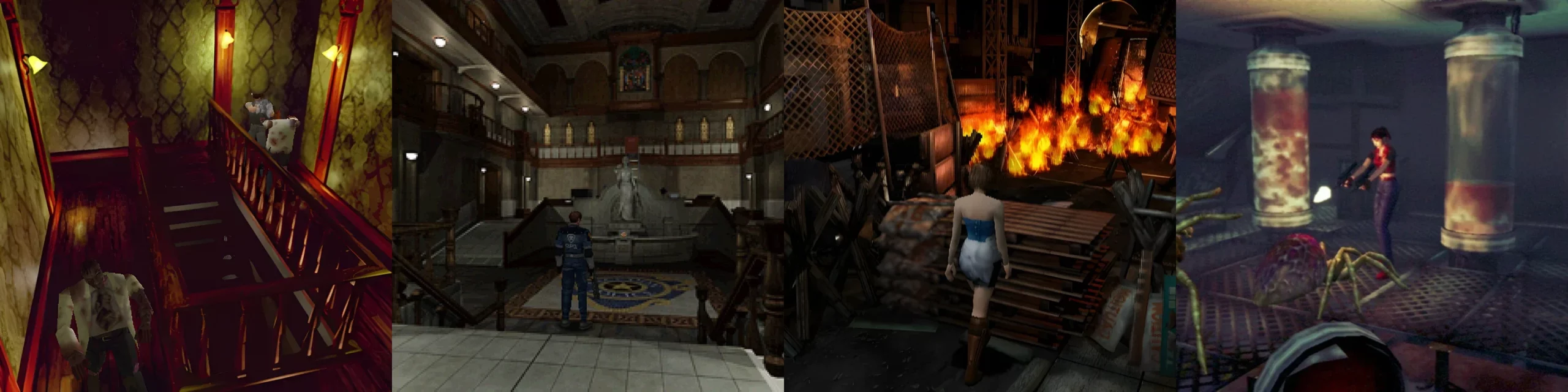
Resident Evil PS1: all the games in the saga on PlayStation (and Code Veronica)
March 1996. A team of elite police officers takes refuge in a mansion lost in the forest; a door slams behind them, and something slowly turns in a hallway. With Resident Evil, Capcom invents the survival horror As we know it: counted ammunition, rationed reserves, fixed cameras that always hide what is happening. In four years, the saga produced three of the most significant games on the PlayStation, then a fourth on the Dreamcast.
Here is the complete guide Resident Evil on PS1 : each episode with its story, its characters, its locations, its puzzles and its enemies, then the order of the saga, our opinion on the best episode, the differences with the remakes and the answers to the questions that we most often ask ourselves.
In short: The Resident Evil saga has three main episodes on PS1: Resident Evil (1996, released in the Director's Cut in 1997), Resident Evil 2 (1998) and Resident Evil 3: Nemesis (1999). Code: Veronica, the direct sequel, was released on the Dreamcast in 2000. A derivative episode, Resident Evil Survivor, also appeared on the PS1 in 2000.
The Resident Evil saga on PS1 in brief
The «classic» saga consists of five games on the first PlayStation and the Dreamcast. The dates indicated are those of the European release.
| Game | Support | Coming out in Europe | Heroes |
|---|---|---|---|
| Resident Evil (and Director's Cut) | PS1 | August 1996 (Director's Cut: December 1997) | Chris Redfield, Jill Valentine |
| Resident Evil 2 | PS1 (2 CDs) | May 1998 | Leon S. Kennedy, Claire Redfield |
| Resident Evil 3: Nemesis | PS1 | Early 2000 | Jill Valentine |
| Resident Evil Survivor | PS1 | March 2000 | Ark Thompson |
| Resident Evil Code: Veronica | Dreamcast (2 GD-ROM) | May 2000 | Claire and Chris Redfield |
1. Resident Evil and Director's Cut (1996-1997): the Spencer manor
- Coming out
- March 1996 in Japan (under the name Biohazard), August 1996 in Europe
- Director's Cut
- December 1997 in Europe
- Studio
- Capcom, directed by Shinji Mikami
- Genre
- Survival horror
- Players
- 1
- Sales
- 2.75 million (original version)
- GearMaster
- ✓ Included
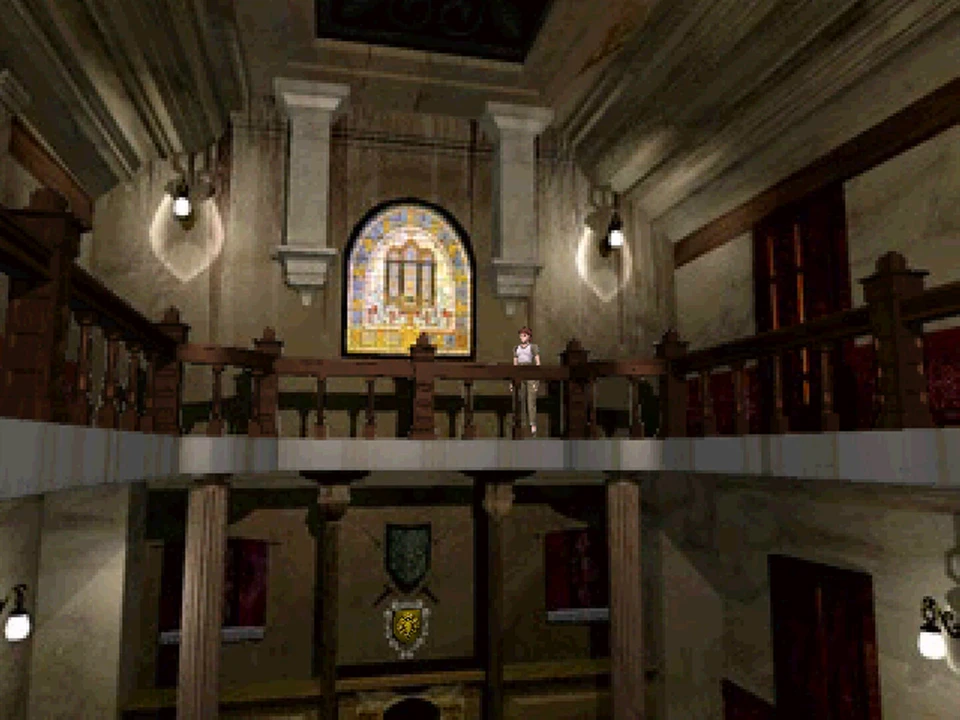
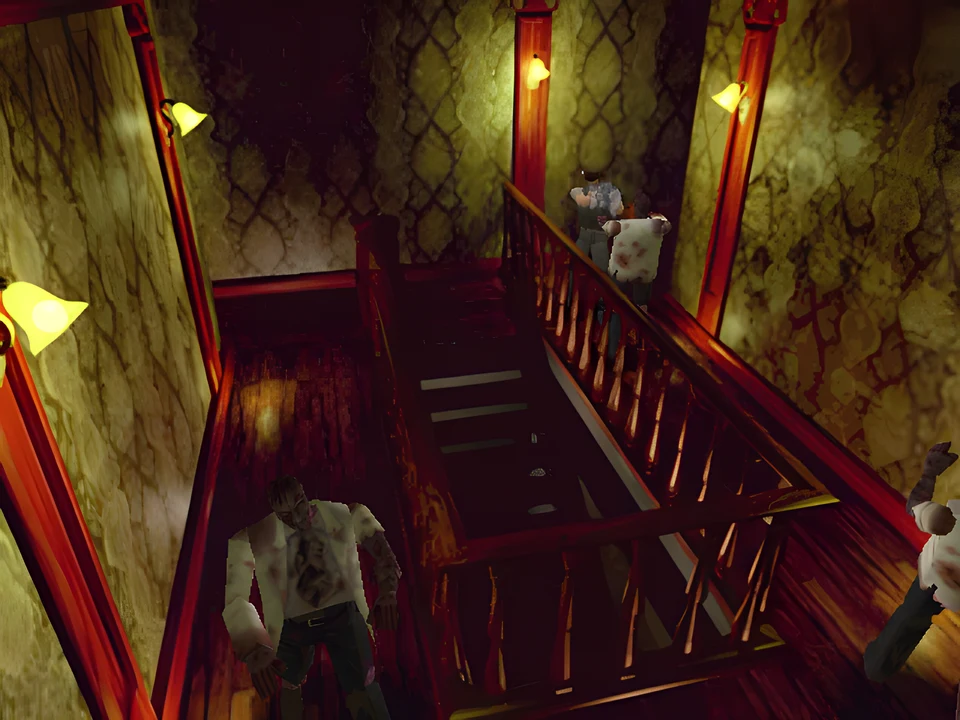
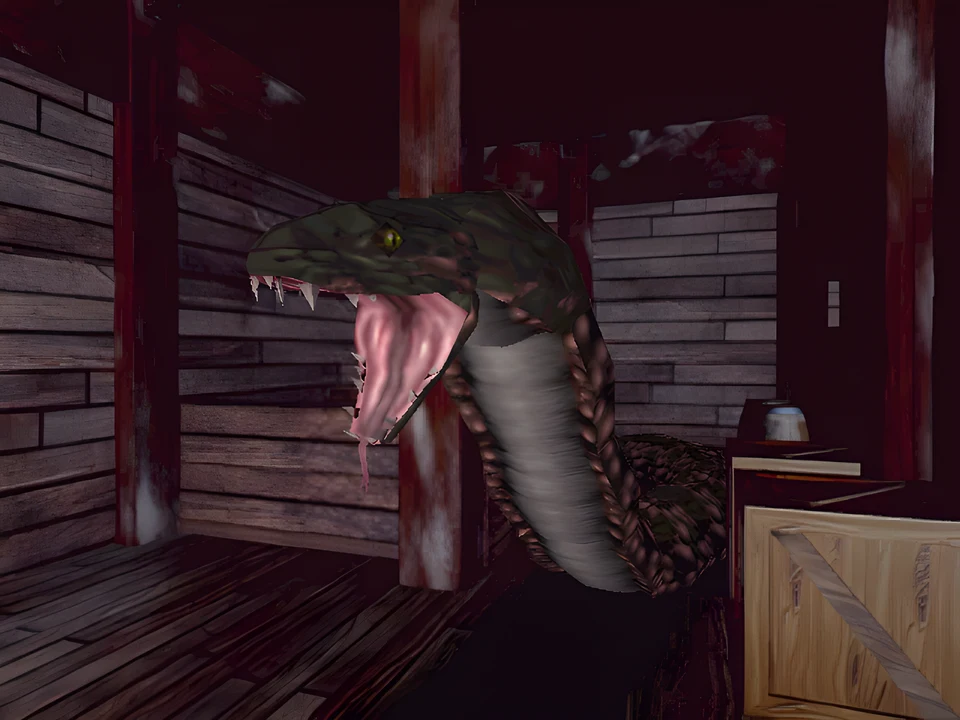
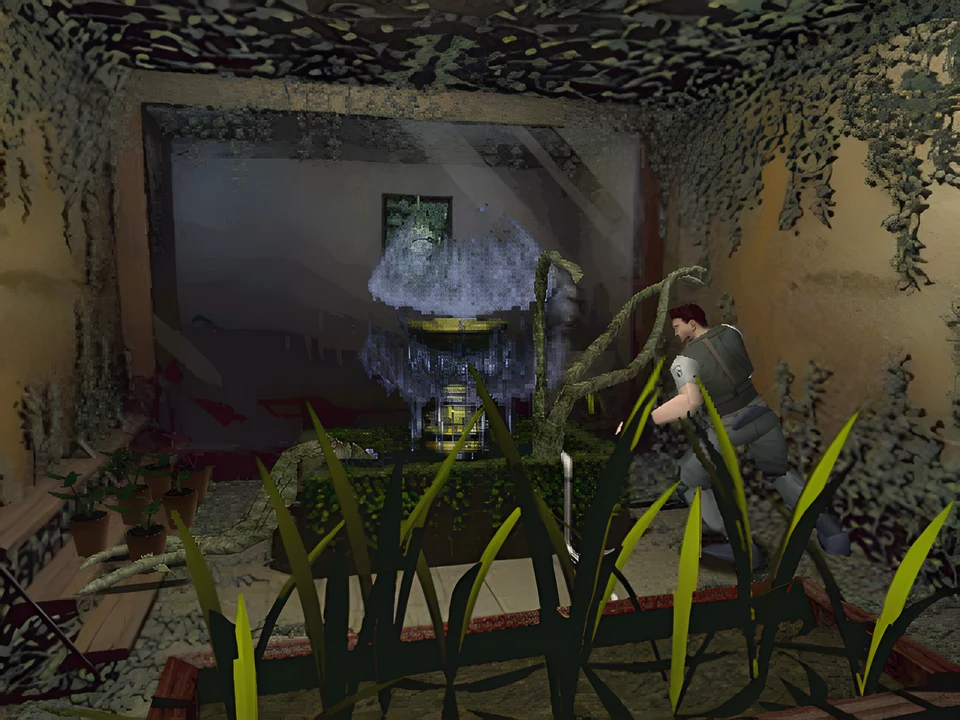
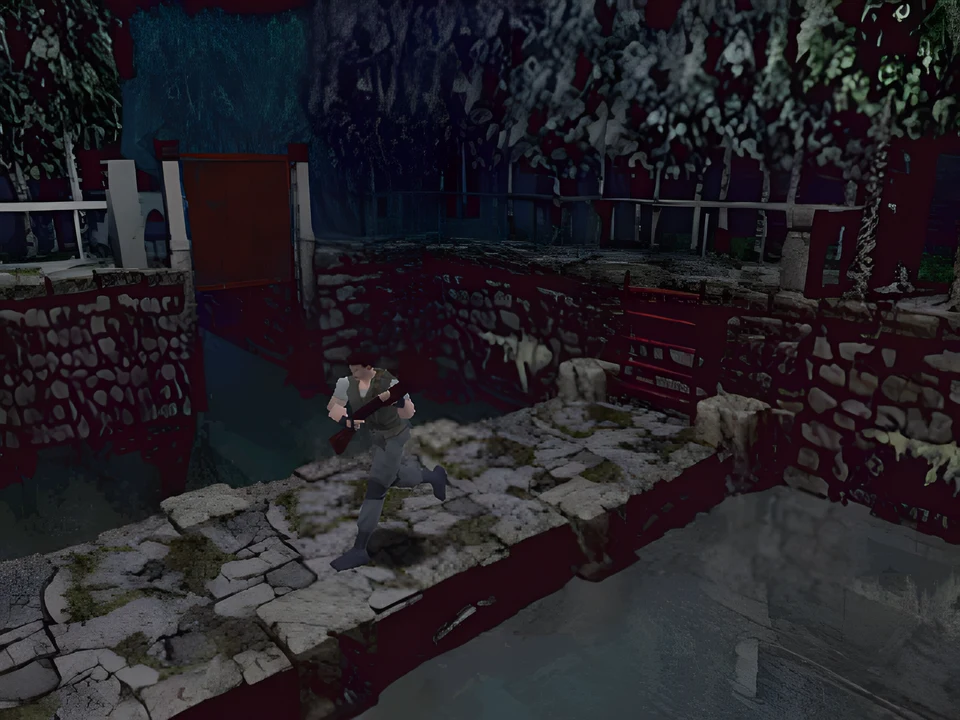
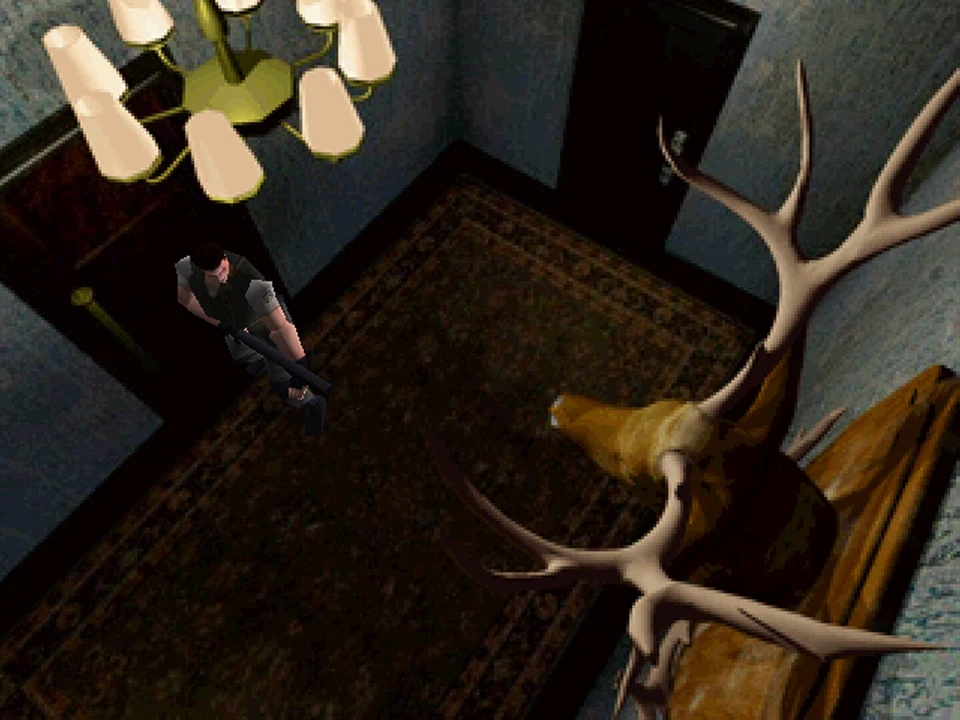
The first Resident Evil is not the first horror game, but it sets the tone for the next ten years. Shinji Mikami draws inspiration from Sweet Home, a 1989 Capcom game, and from George A. Romero's zombie films. He creates a simple and terrifying formula: pre-calculated CGI environments, real-time 3D characters, fixed shots framed like in cinema and an inventory so small that you have to think before picking up each item.
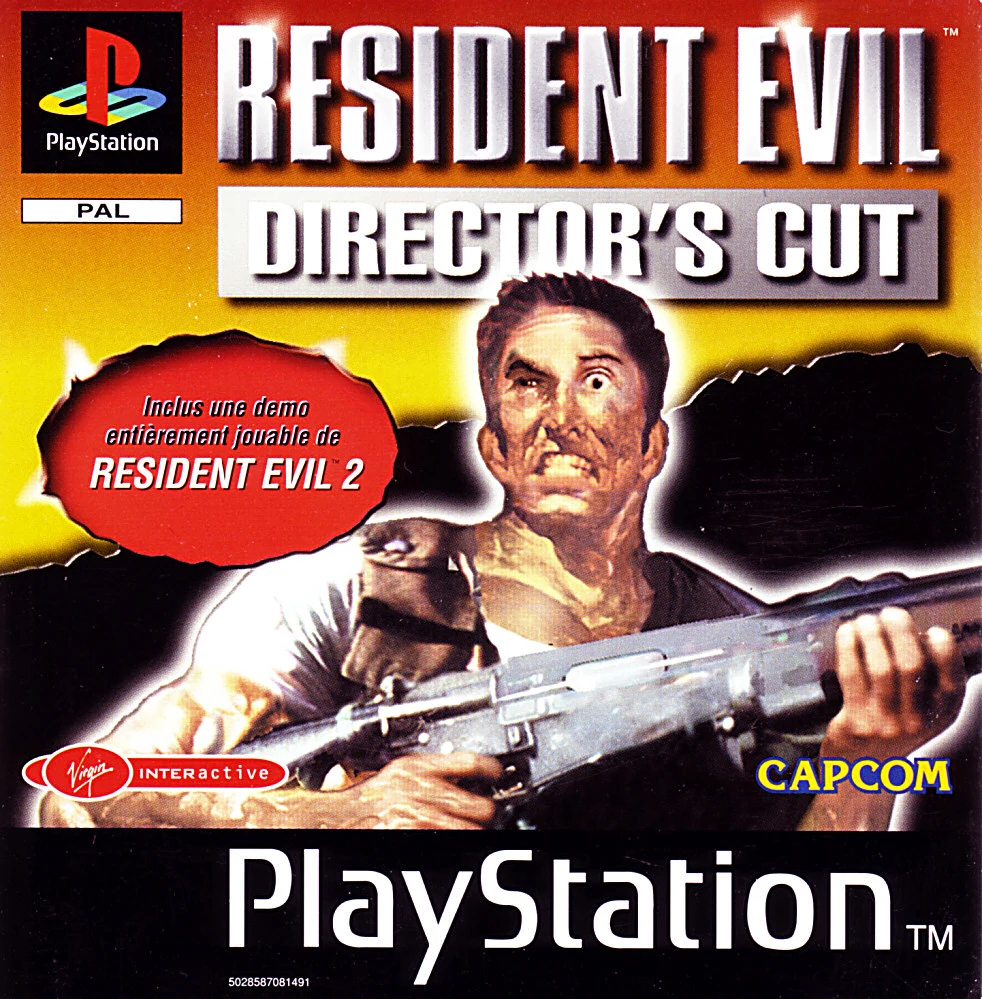
On PS1, the game exists in two versions. The original from 1996, then the Director's Cut Since 1997, the version to be preferred today: it contains the original game, a more generous Beginner mode with more ammunition and an Arranged mode that moves objects, changes camera angles, and dresses the heroes in new costumes. The European box also promises a demo of Resident Evil 2 as a bonus.
The story
July 1998. A series of savage murders strikes the Arklay Mountains, at the gates of Raccoon City. The Bravo team of S.T.A.R.S., the local police's elite unit, sets out to investigate and has not been heard from since. The Alpha team sets out in search of them. As soon as they set off, their members are attacked by monstrous dogs; their pilot flies off without them, and the survivors take refuge in a large isolated mansion.
The Spencer manor is a trap. Its corridors are filled with walking dead, its doors are sealed by absurd mechanisms, and its basements hide a secret Umbrella laboratory, the pharmaceutical giant that keeps Raccoon City alive. You choose to play as Chris Redfield or Jill Valentine, and the adventure changes according to that choice: allies encountered, scenes, objects, and endings are not the same.
The characters of Resident Evil
Touch a portrait to discover the character.
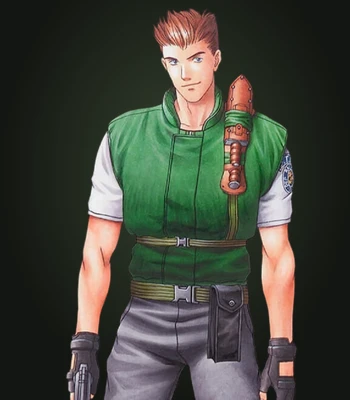
Chris Redfield
Elite shooter for the Alpha team and former Air Force pilot. He takes better hits than Jill, but only carries six items.
- Team
- S.T.A.R.S. Alpha
- Asset
- Resistance
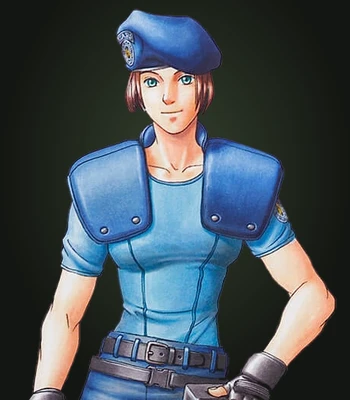
Jill Valentine
Specialist in crochet work and explosives. She carries eight items, opens simple locks and can count on Barry.
- Team
- S.T.A.R.S. Alpha
- Asset
- Crochet and inventory
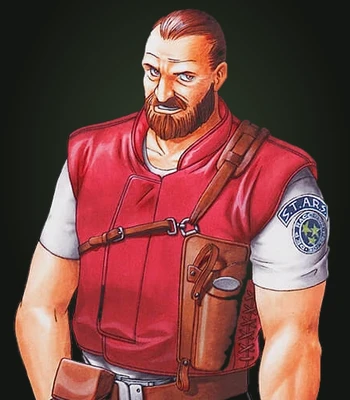
Barry Burton
The team's weapons expert, a father of a family and a veteran. He helps Jill several times, with a Magnum in hand, but seems to be hiding something.
- Team
- S.T.A.R.S. Alpha
- Weapon
- Magnum
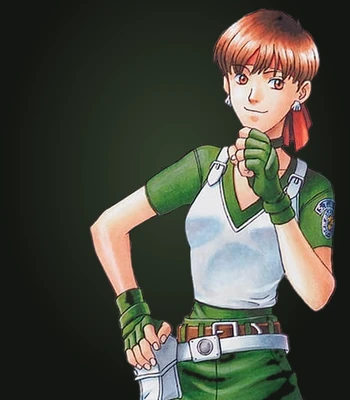
Rebecca Chambers
The youngest of the S.T.A.R.S., a nurse on Team Bravo. Chris meets her in the manor, and she can either heal him or help him overcome certain obstacles.
- Team
- S.T.A.R.S. Bravo
- Role
- Nurse
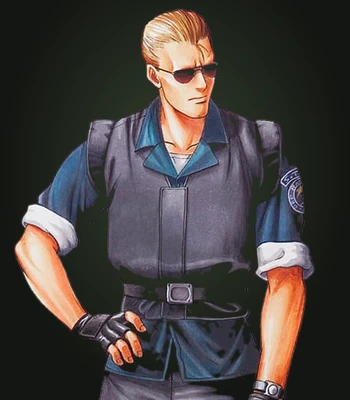
Albert Wesker
The captain of the S.T.A.R.S., always calm behind his black glasses. He regularly disappears during the exploration of the mansion.
- Team
- S.T.A.R.S. Alpha
- Grade
- Captain

Plante 42
A giant plant that has invaded the researchers' residence. Its roots run through the entire building.
- Location
- The residence
- Weakness
- A chemical product
The gameplay
Travels are made with the famous «tank» checks: you turn around and head in the direction of the gaze, which makes every escape tricky. Ammo is scarce, medicinal plants combine (the green one heals, the red one doubles its effect, the blue one cures poison), and every save consumes a ribbon of ink to be slipped into a typewriter.
The two heroes don't play the same way. Chris takes better advantage of the attacks but only has six items in his inventory. Jill doesn't have the same resistance, but she carries eight items, opens the simple locks with her hook and receives help from Barry. The storage crates, magically connected to each other, allow you to leave items in one room and retrieve them in another.
The landmark places
| Location | What you'll find there |
|---|---|
| The grand hall of the manor | The double staircase, the dining room and the first encounter with a zombie, one of the most famous scenes in the video game. |
| The wings of the manor | A gallery of paintings, a library, a piano and a room with a ceiling that descends: each room hides a mystery. |
| The court and the garden | An open passage leading to the residence, with its dogs and snakes. |
| The residence | The researchers' dorm, its flooded aquarium and its greenhouse overrun by a giant plant. |
| The caves and the laboratory | The underground galleries then the secret laboratory, where everything makes sense. |
The riddles
The manor is a museum of mechanisms: a sonata to be played on the piano to open a secret passage, switches to be operated under the paintings in the correct order, armor that releases gas if one makes a mistake, four keys adorned with a sword, armor, a shield and a helmet, and badges to be placed to open the doors of the estate.
The enemies and bosses
| Creature | Where and how |
|---|---|
| Zombies | There are many lenses, and they are formidable in groups. In Arranged mode, faster and more resistant zombies appear. |
| Cerbères | The infected dogs from the introduction, which emerge through the windows of the corridors. |
| Bats and giant spiders | The threats of the corridors and the caves, more annoying than deadly. |
| Hunters | Reptiles with sharp claws invade the manor in the second act. Their attacks can be fatal. |
| Yawn | A giant snake with deadly venom crossed the manor twice. |
| Plante 42 | The mutated plant that has invaded the residence. A chemical product can be used to weaken it before the fight. |
| Neptune and Black Tiger | A shark in the flooded aquarium and a giant spider at the bottom of the caves. |
Show the rest (reveals the end of the game)
In the laboratory, Captain Albert Wesker reveals that he works for Umbrella and that the S.T.A.R.S. were sent to the manor to serve as test subjects. He awakens the Tyrant, Umbrella's ultimate biological weapon, which pierces him before he faces the hero. The final battle takes place on the helipad, while the manor self-destructs, and Brad finally returns with the helicopter. The ending depends on the teammates rescued on the way.
The welcome upon his departure
Released without much fanfare, Resident Evil became one of the first major successes for PlayStation in the West, to the point that Capcom released several versions within a year. The dialogue and the introduction scene filmed with real actors are laughable, but the atmosphere, the sound and the tension have hardly aged. The game is the starting point of a series that today has sold over 200 million copies.
Why play it again today?
For the mansion. No episode has ever managed to recapture that sense of exploration of a unique place, where you learn about every single room until you know exactly where the zombies sleep. The Director's Cut also adds an Arranged mode that surprises even those who know the game by heart.
2. Resident Evil 2 (1998): The Fall of Raccoon City
- Coming out
- January 1998 in Japan and the United States, May 8, 1998 in Europe
- Studio
- Capcom, directed by Hideki Kamiya
- Support
- PS1, 2 CDs (one per hero)
- Genre
- Survival horror
- Players
- 1
- Sales
- 4.96 million, the best-selling Resident Evil of the PS1 era
- GearMaster
- ✓ Included
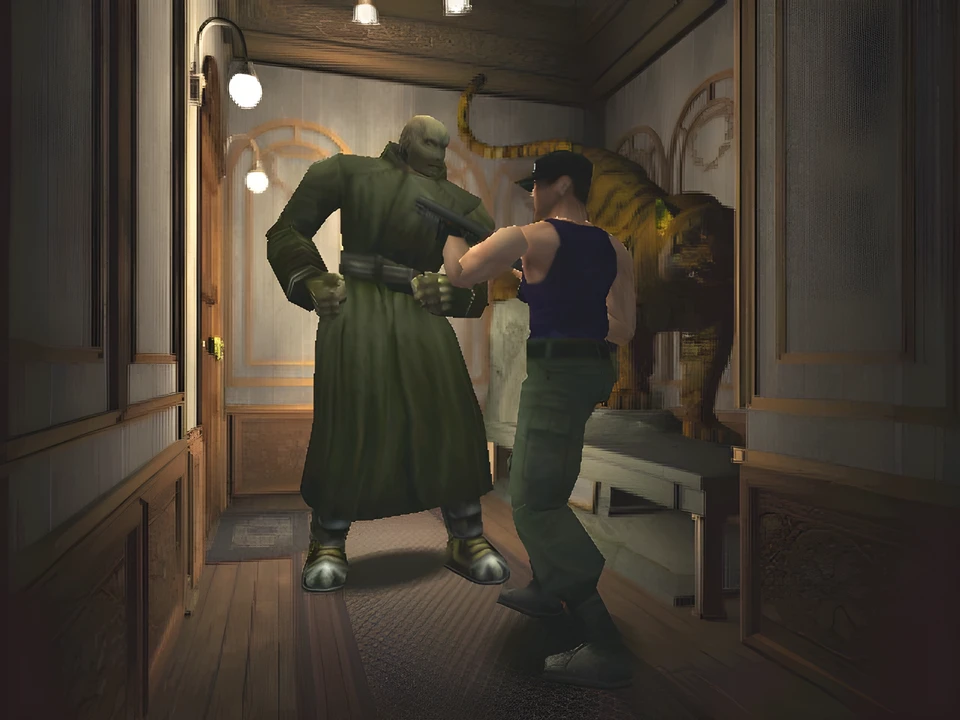
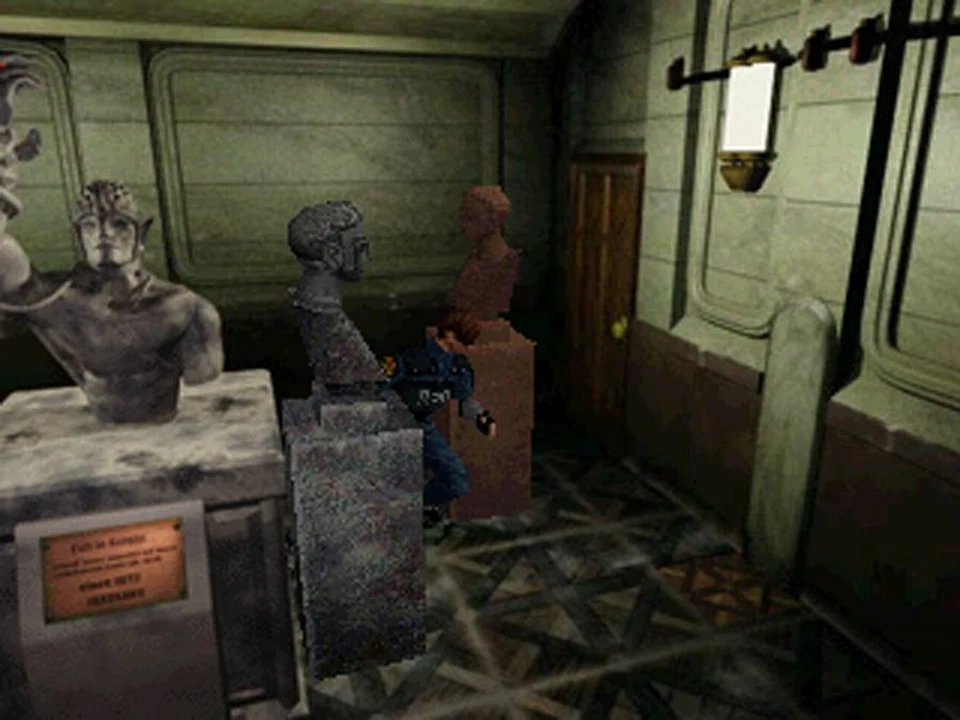
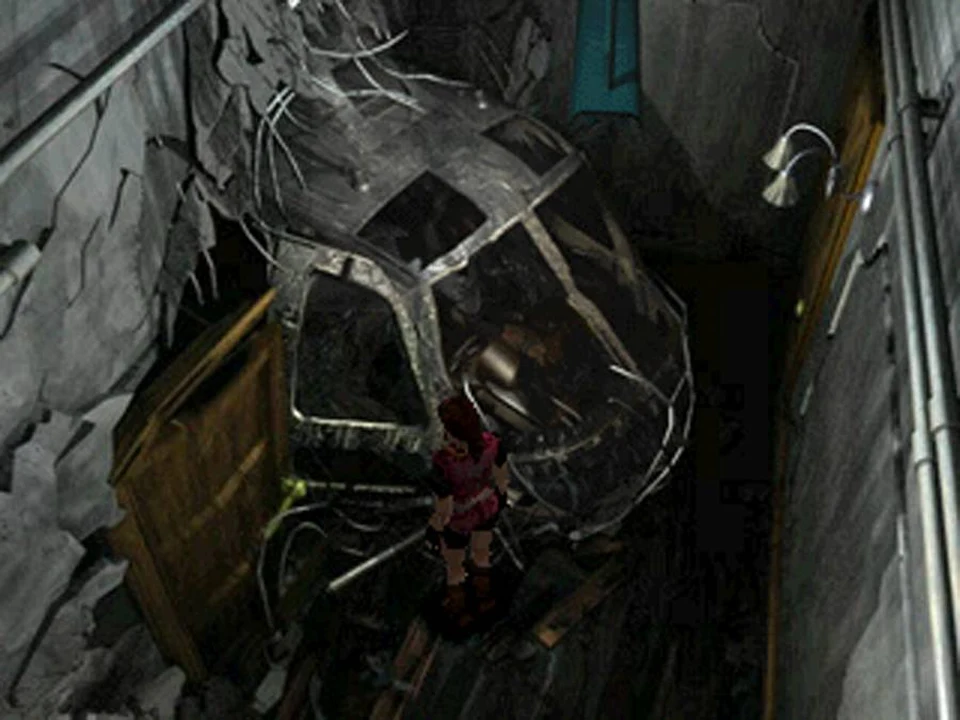
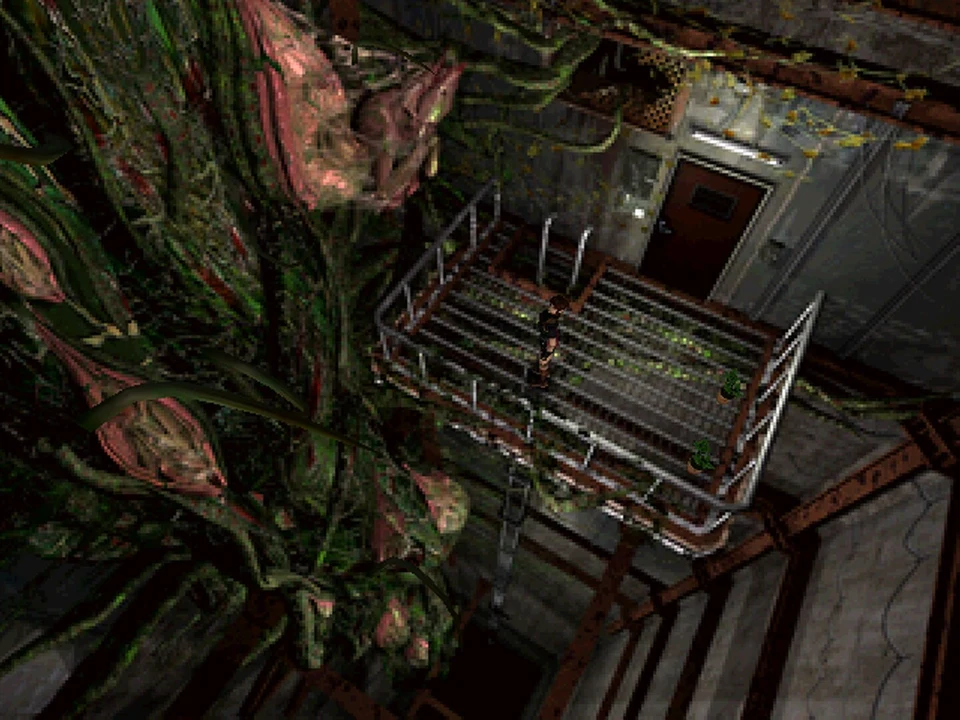
Resident Evil 2 comes from a long way away: a first version almost complete, known to fans as «Resident Evil 1.5», is thrown in the trash because the team finds it too clever. The game starts from scratch under the direction of Hideki Kamiya and comes out in 1998 with a crazy ambition for the PlayStation: to get out of the mansion and plunge the player into the middle of an entire city that is collapsing.
The result is on two CDs, one per hero, and it is the favorite episode of many players. It is more spectacular, richer in cinematic scenes and more nerve-wracking than the first one, without losing any of the suspense of the corridors. In France, the game is released in French, with translated texts and English voiceovers.
The story
At the end of September 1998, two months after the events at the manor. Leon S. Kennedy, a young police recruit, arrives in Raccoon City on his first day of duty. Claire Redfield, meanwhile, comes to pick up her brother Chris, of whom she has no news. The city is unrecognizable: a virus escaped from Umbrella's laboratories has turned its inhabitants into walking dead.
The two heroes cross paths in a street on fire; they are separated by an accident and find themselves on opposite sides of the police station. Their escape leads them from the streets of the city to the sewers, then to Umbrella's secret laboratory, buried beneath the city, where a researcher has developed a virus even more dangerous than the first.
The characters from Resident Evil 2
Tap on a portrait to view its details.
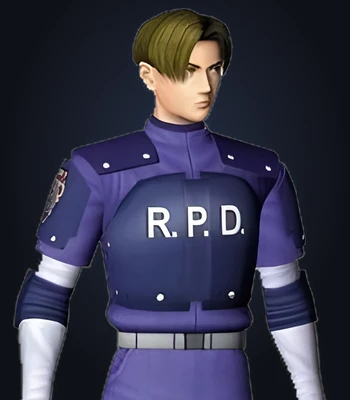
Leon S. Kennedy
A young recruit of the Raccoon City police, he arrives on his first day of duty at the worst possible time. Pump-action shotgun and magnum.
- Profession
- Beginner police officer
- CD
- Disc 1
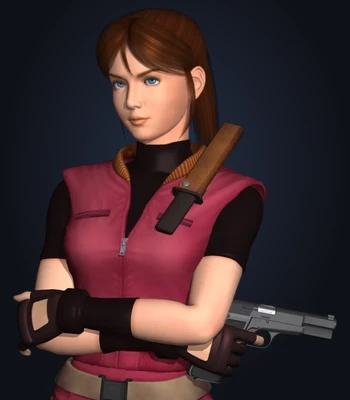
Claire Redfield
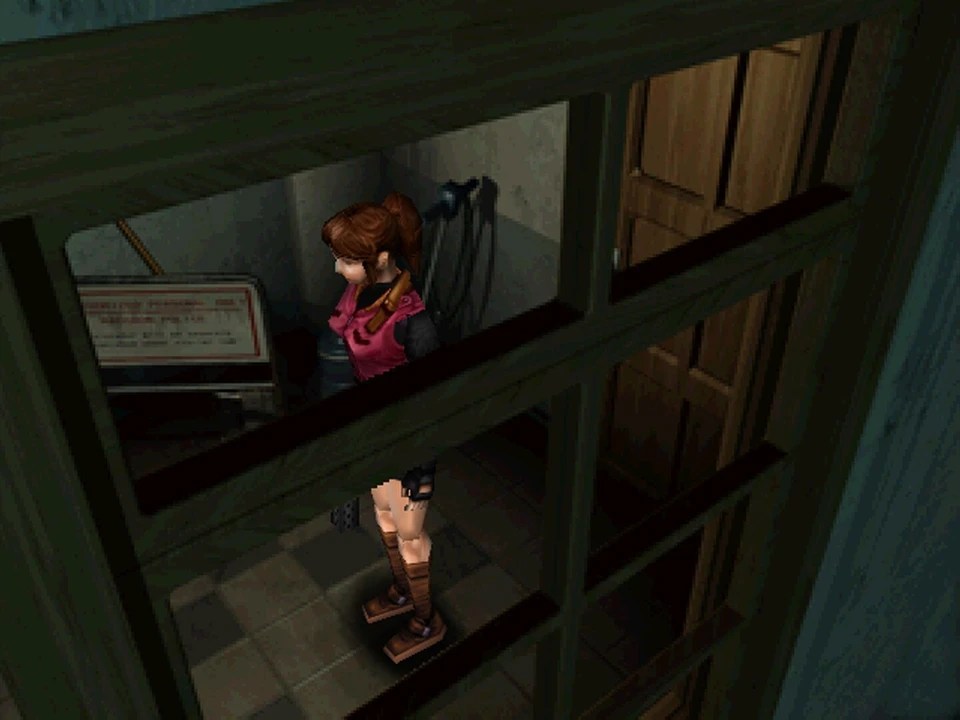
A student and a biker, she comes to Raccoon City to find her brother Chris. She uses a grenade launcher and an crossbow.
- Profession
- Student
- CD
- Disc 2

Ada Wong
A mysterious woman who says she is looking for her boyfriend, a researcher from Umbrella. She regularly crosses Leon's path.
- Scenario
- Leon
- Statute
- Mysterious
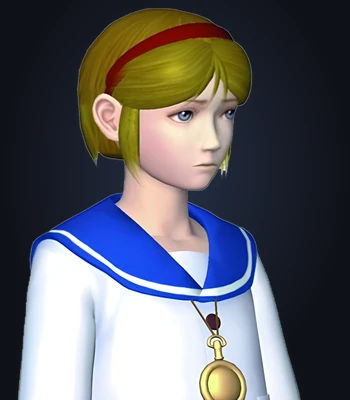
Sherry Birkin
A 12-year-old girl is lost in the city; she is the daughter of two Umbrella researchers. Claire takes her under her protection.
- Scenario
- Claire
- Age
- 12 years

William Birkin
The Umbrella researcher who originated the G virus, a virus even more dangerous than the one from the manor.
- Employer
- Umbrella
- Creation
- The G virus
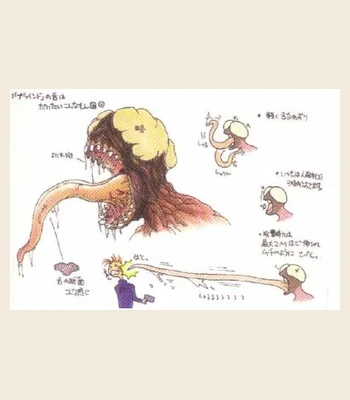
Licker
The iconic creature from Resident Evil 2: without a skin, blind, it detects its prey by sound and climbs up the walls.
- Apparition
- Commissariat
- Sense
- The hearing
The gameplay
The great find of Resident Evil 2 is the zapping system. Each hero has their own CD and their own scenario. Once the first adventure is completed, the «B» scenario of the other hero is launched, which tells the same story from another angle, with different paths, bosses, and scenes. Some actions in the first scenario have consequences in the second, such as an item or weapon taken from the first scenario that will no longer be there in the second. In total, there are four combinations to play.
Zombies react better to gunfire and weapons differ depending on the hero: a pump-action shotgun and magnum for Leon, a grenade launcher and crossbow for Claire. Good performances unlock bonuses, including a mini-story centered on Hunk, an Umbrella agent trapped in the city.
The landmark places
| Location | What you'll find there |
|---|---|
| The streets of Raccoon City | A city on fire, a gun shop, a bus overturned and streets where zombies are coming from everywhere. |
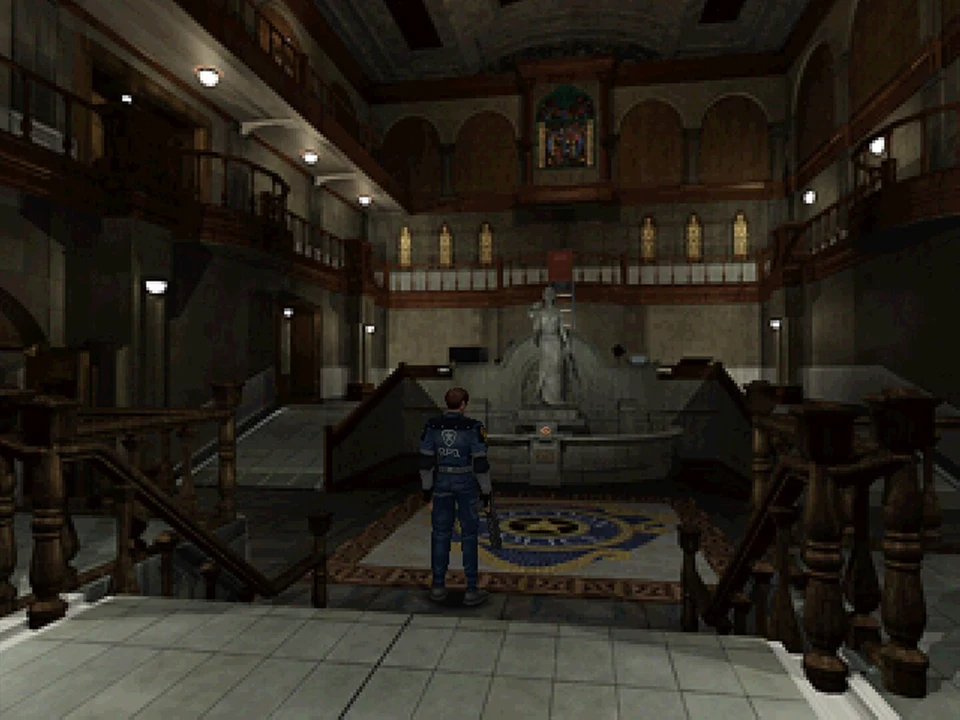
| The police station | An old art museum transformed into a police station: a monumental hall, statues, a library and secret passages. |
| The sewers | An flooded maze that connects the police station with the rest of the city. |
| The factory and the train | The industrial facilities that hide the access to Umbrella's underground world. |
| The Umbrella laboratory | The secret complex buried beneath the city, the final stage of the escape. |
The riddles
The precinct keeps the spirit of the manor: medallions to be placed on the statue in the hall to open a passage, statues to be moved to their places, shelves to be moved in the library, chess pieces to be collected, and access cards to be retrieved to progress in the laboratory.
The enemies and bosses
| Creature | Where and how |
|---|---|
| Zombies | Residents, police officers, researchers: they invade everything, and some arrive in groups. |
| Lickers | The newcomers in Resident Evil 2: creatures without skin, blind, with oversized tongues that crawl on the walls and ceilings. |
| Dogs, owls and spiders | The secondary threats from the streets and sewers. |
| Ivy | Mutant plants invade the laboratory and project acid. |
| The giant alligator | The sewer guard, one of the most memorable fights in the game. |
| G | A creature that mutates with each encounter and pursues the heroes to the end. |
| Mr. X | In scenario B, a giant, almost indestructible, monster chases the player through the police station. |
The welcome upon his departure
Resident Evil 2 was a critical and commercial success. With 4.96 million copies sold on PlayStation, it remains the best-selling Resident Evil on the console to date and one of Capcom's biggest hits. It was later adapted for PC and Dreamcast, and then remade in 2019.
Why play it again today?
For the zapping system, which makes you want to replay the game immediately with the other hero, and for the police station, one of the most striking locations in video games. It is also the ideal episode to discover the saga: more accessible than the first one, longer and more spectacular.
Want to go back to Raccoon City?
Resident Evil Director's Cut, Resident Evil 2, Resident Evil 3 and Code: Veronica are on the GearMaster, with 20,000 games from 70 consoles, ready to be played via HDMI.
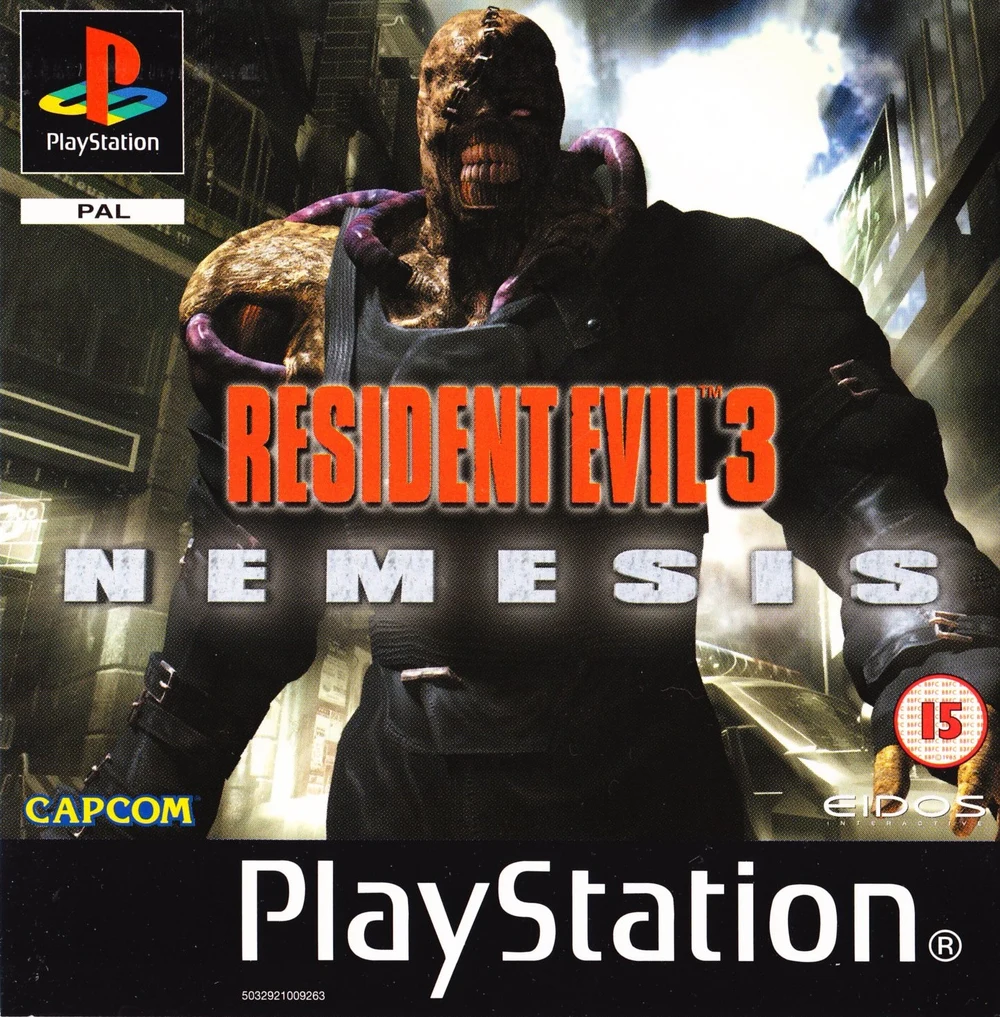
3. Resident Evil 3: Nemesis (1999): Jill's last escape
- Coming out
- September 1999 in Japan, November 1999 in the United States, early 2000 in Europe
- Studio
- Capcom, directed by Kazuhiro Aoyama
- Support
- PS1, 1 CD
- Genre
- Survival horror
- Players
- 1
- Sales
- 3.5 million
- GearMaster
- ✓ Included
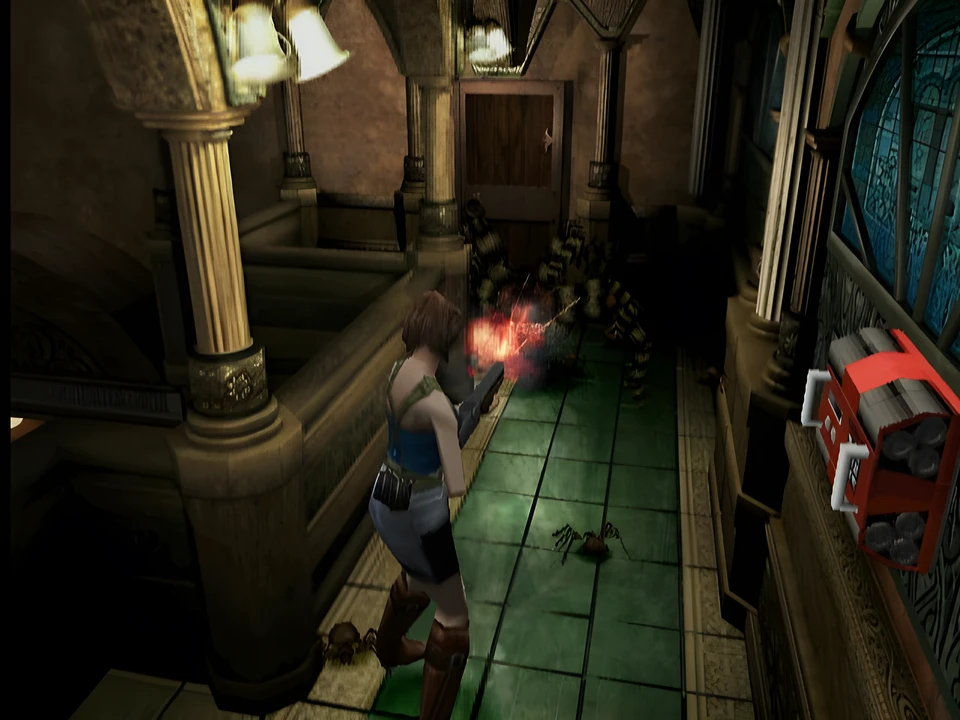
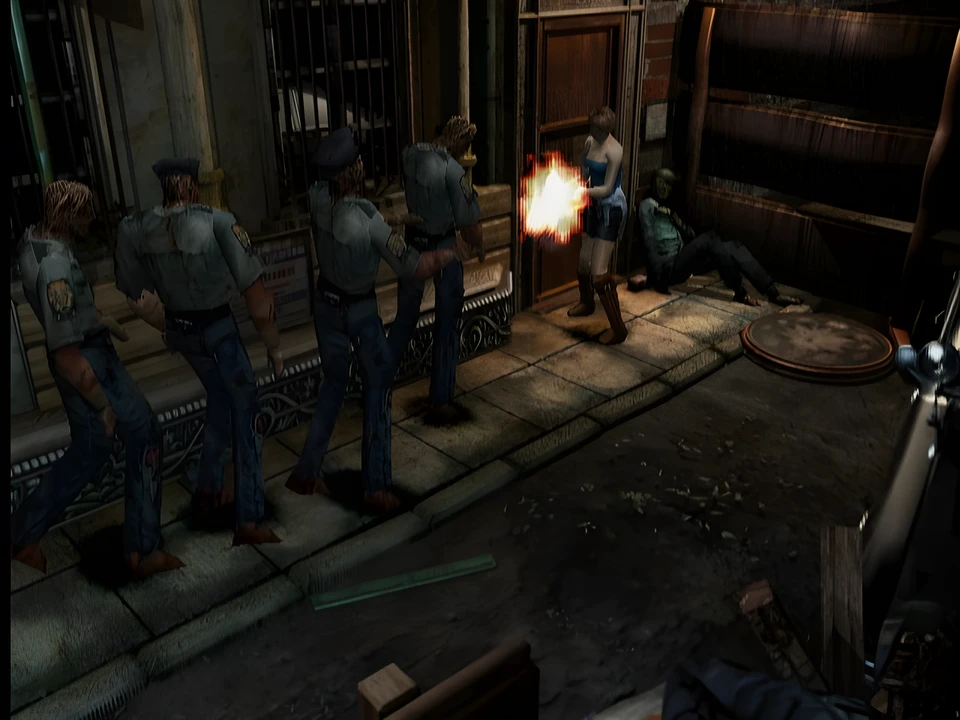
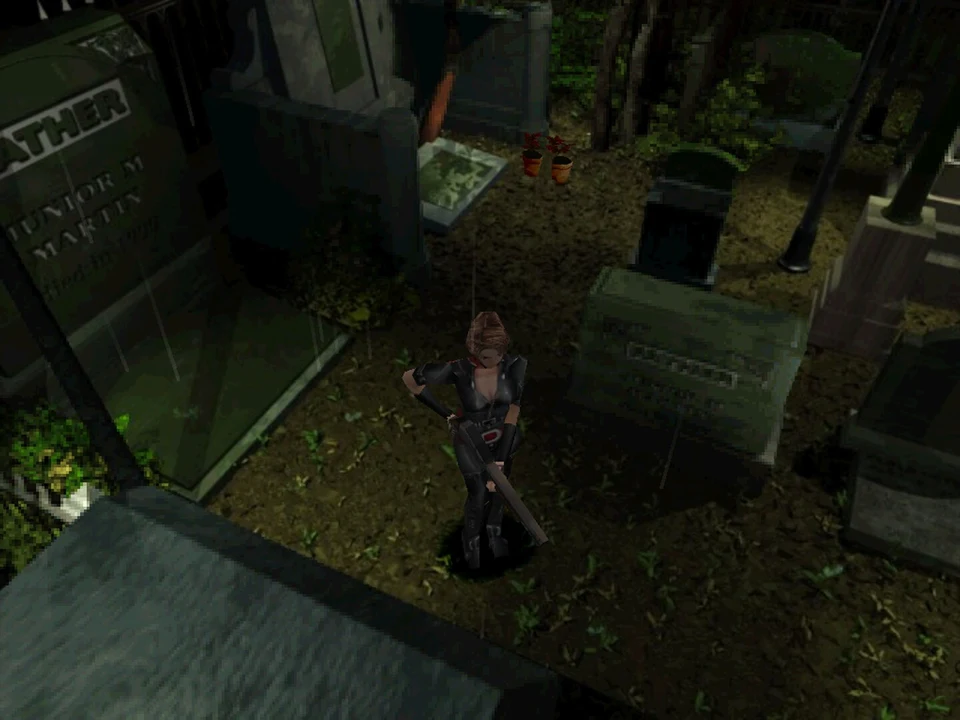
Resident Evil 3 was not intended to be the third installment. Capcom first reserved this title for the project that would become Code: Veronica, and simultaneously launched a shorter episode on PlayStation focused on Jill Valentine. As the PS2 approached and the Dreamcast did not have the same audience, it was ultimately this game that received the number 3 and the subtitle Nemesis.
This is the most action-oriented episode of the PS1 era. More ammo, more enemies, an evasive action, choices to be made in a fraction of a second, and above all, a pursuer who never gives up: the Nemesis. The game was released in French in Europe.
The story
On September 28, 1998, Raccoon City had already fallen. Jill Valentine, who had left S.T.A.R.S. after the mansion incident, decided to flee the city on her own. On her way, she encountered a squad of Umbrella mercenaries who had come to rescue the civilians, including Carlos Oliveira, a young soldier with a big heart.
The story overlaps with that of Resident Evil 2: it begins the day before Leon and Claire arrive and ends after their escape. In between, Jill must escape the Nemesis, a biological weapon sent by Umbrella to eliminate the last members of S.T.A.R.S.
The characters of Resident Evil 3
Tap on a portrait to view its details.

Jill Valentine
After the manor incident, Jill left S.T.A.R.S. She is now trying to flee Raccoon City before it is too late.
- Former unit
- S.T.A.R.S.
- Objective
- Leave the city
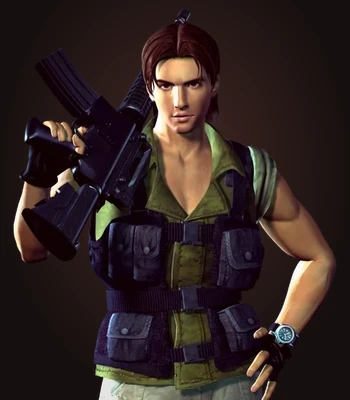
Carlos Oliveira
A young Umbrella mercenary is sent to rescue the civilians. He becomes Jill's most loyal ally, and we play him at some point in the adventure.
- Unity
- Mercenaries of Umbrella
- Weapon
- Assault rifle
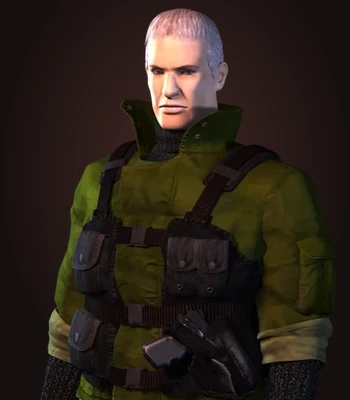
Nicholai Ginovaef
Sergeant of the Umbrella mercenary squad, cold and calculating. His intentions remain unclear throughout the entire adventure.
- Unity
- Mercenaries of Umbrella
- Grade
- Sergeant
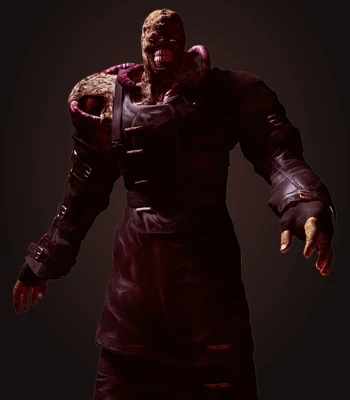
Nemesis
The biological weapon sent to eliminate the S.T.A.R.S. He runs, opens the doors, wields a rocket launcher and keeps coming back.
- Target
- The S.T.A.R.S.
- Weapon
- Rocket launcher
The gameplay
The Nemesis changes everything. It appears at key moments, breaks through walls, runs faster than Jill and follows her from room to room. You can fight it to gain items or escape to save your ammo. During certain encounters, the screen freezes and offers two choices to be made in the moment, such as jumping through a window or hiding: these real-time selection they change the course of the scene and sometimes the ending.
Jill also has a dash, a quick turn (a first in the series), and a kit to make her own ammunition by mixing powders. Some items and puzzle solutions change from one part to the next. The ending unlocks the Mercenaries mini-game, where you traverse the city against the clock with one of Umbrella's soldiers.
The landmark places
| Location | What you'll find there |
|---|---|
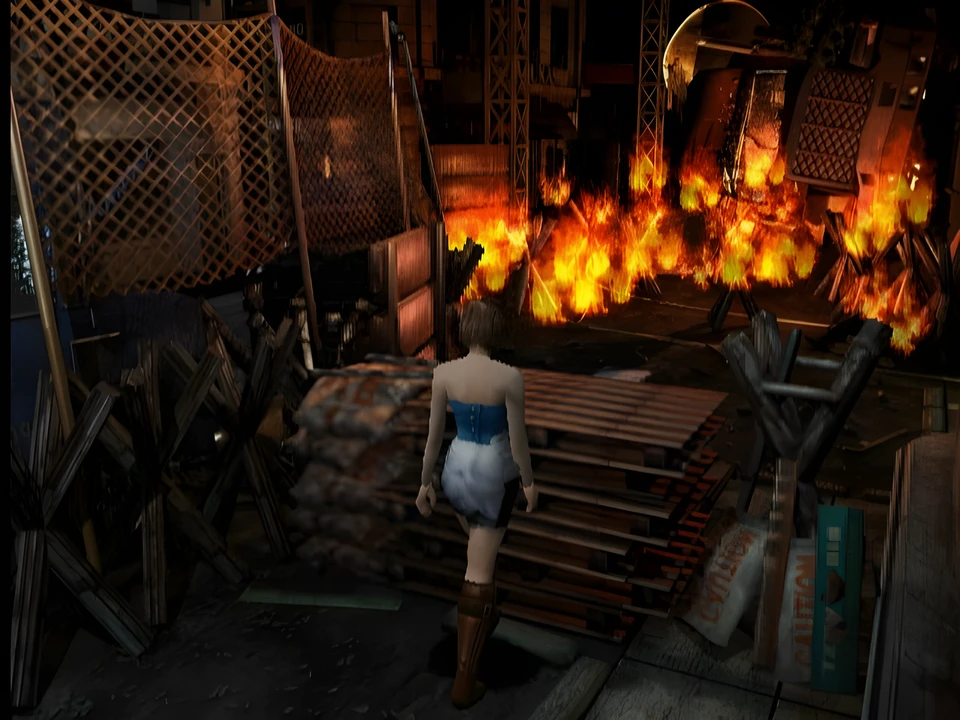
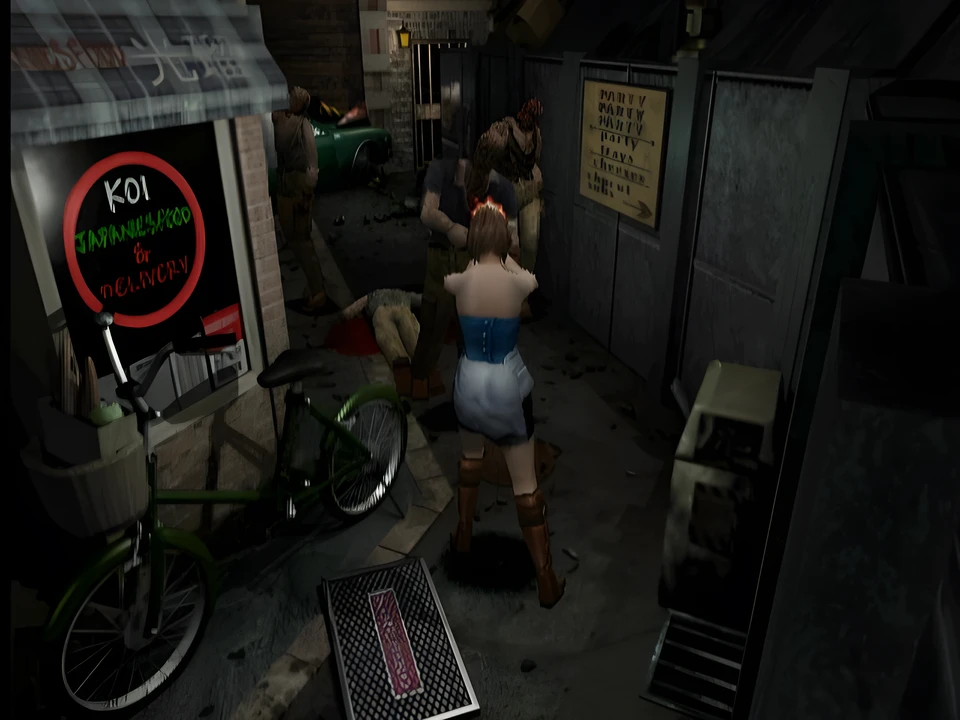
| The streets of the city center | Barricades, wrecked cars, a bar and a warehouse: Raccoon City from the inside, in the midst of chaos. |
| The police station | The same building as in Resident Evil 2, a few hours earlier, and the first encounter with the Nemesis. |
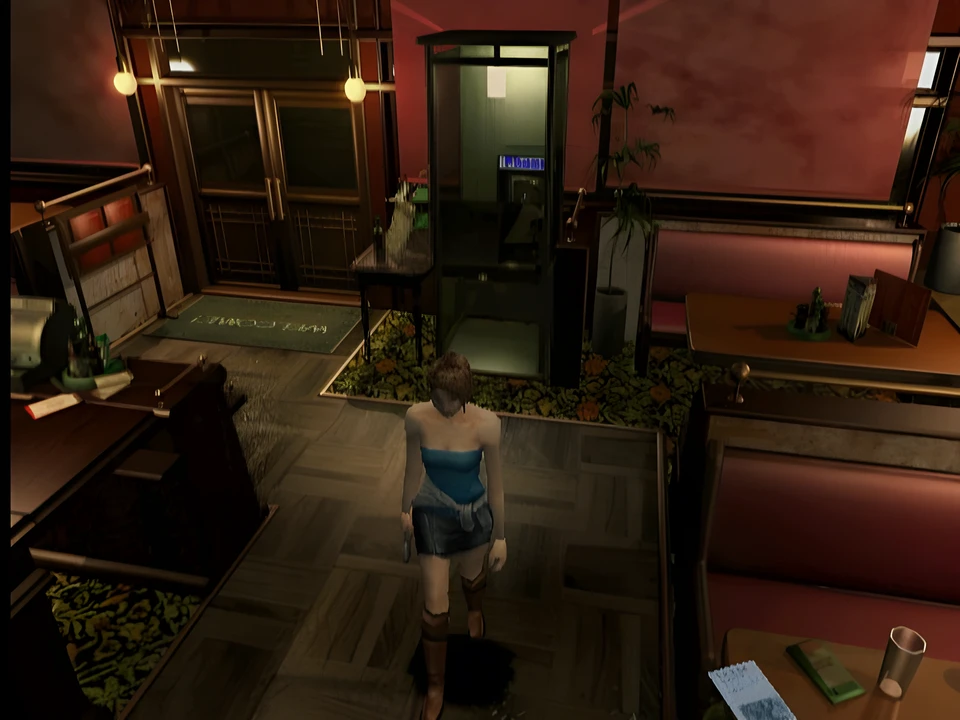
| The newspaper offices and the restaurant | Smaller interiors where every door can hide a threat. |
| The clock tower | The heart of the second half of the game, with its puzzle and its defining confrontation. |
| The hospital, the park and the cemetery | A long loop towards the exit of the city, from the sanitized corridor to the returned land. |
| The abandoned factory | The final stage of Jill's escape. |
The riddles
The puzzles are shorter than in the first two episodes, but several have a solution that changes with each playthrough: a music box to tune and gems to place in the clock tower mechanism, a sample of water to reconstitute at the factory, or a code to find in the documents in an office.
The enemies and bosses
| Creature | Where and how |
|---|---|
| Nemesis | The S.T.A.R.S. hunter, armed with a rocket launcher: he can appear in places that were thought to be safe. |
| Zombies | More than ever before, sometimes in groups in the streets. |
| Drain Deimos | Giant insects that come out of the sewers. |
| Hunters | New variants of the enemy from the first episode. |
| Dogs, owls and spiders | The regular residents of Raccoon City. |
| The giant worm | A huge earthworm attacks Jill near the park and the cemetery. |
Show the rest (reveals the end of the game)
Nicholai Ginovaef, the Sergeant of the Umbrella squad, turns out to be a traitor tasked with collecting combat data on biological weapons. The Nemesis, meanwhile, mutates throughout the clashes until he loses all human form. The escape ends in a helicopter, just before the government destroys Raccoon City on October 1, 1998.
The welcome upon his departure
With 3.5 million copies sold, Resident Evil 3 is another success. It is sometimes criticized for being shorter than its predecessors, but the constant threat of the Nemesis and the real-time choices make it a standalone episode, very replayable thanks to the elements that change from one part to the next.
Why play it again today?
The sense of being hunted. The Nemesis turns every return trip into a moment of tension, and the real-time choices make you want to start over to see the other version of the scenes. It is also the last look at Raccoon City before its destruction.
4. Resident Evil Code: Veronica (2000): the sequel on Dreamcast
- Coming out
- February 2000 in Japan, May 2000 in Europe
- Studio
- Capcom, directed by Hiroki Kato
- Support
- Dreamcast, 2 GD-ROM
- Genre
- Survival horror
- Players
- 1
- Sales
- 1.14 million on the Dreamcast
- GearMaster
- ✓ Included
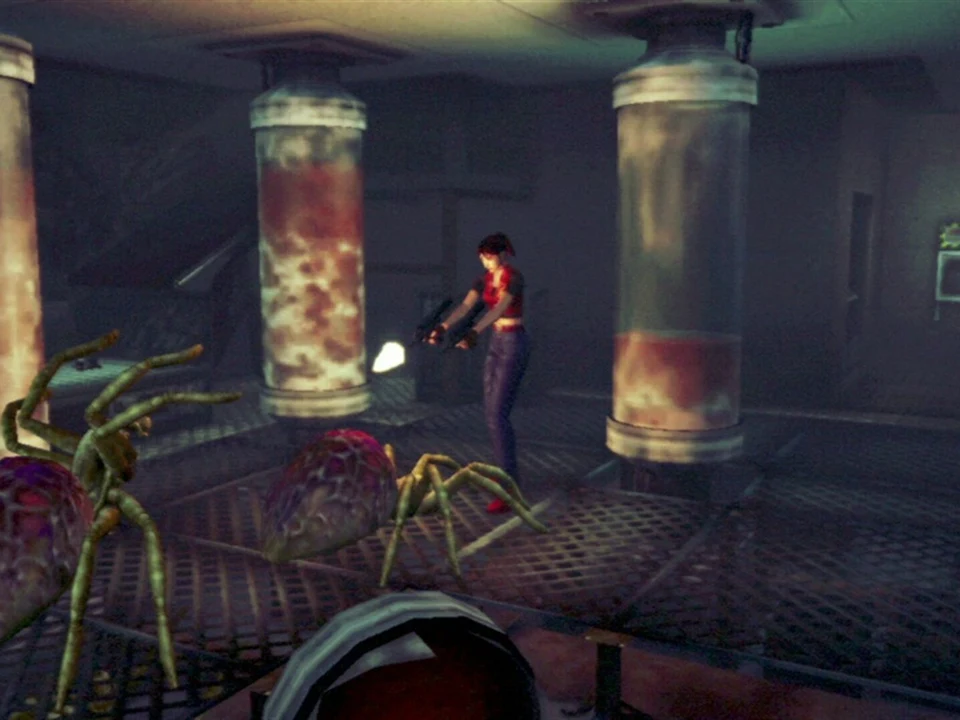
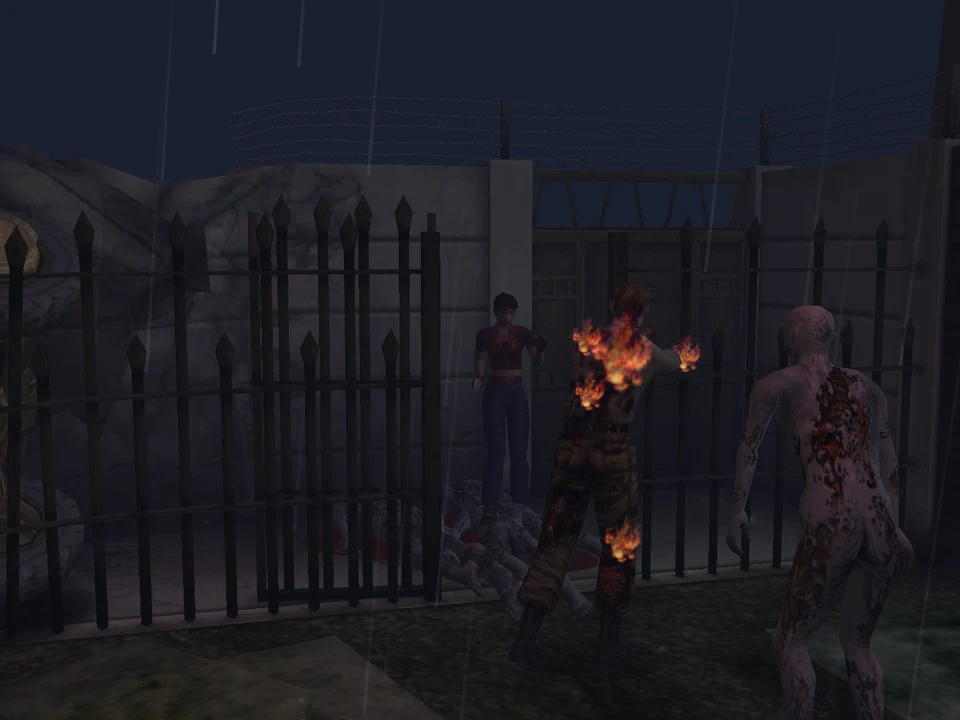
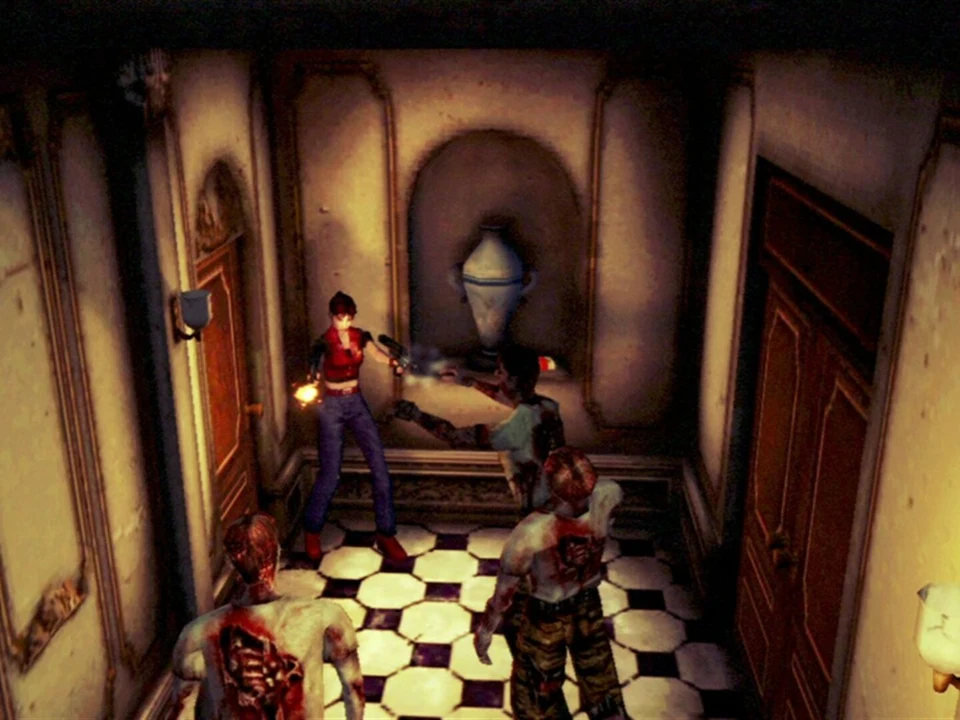
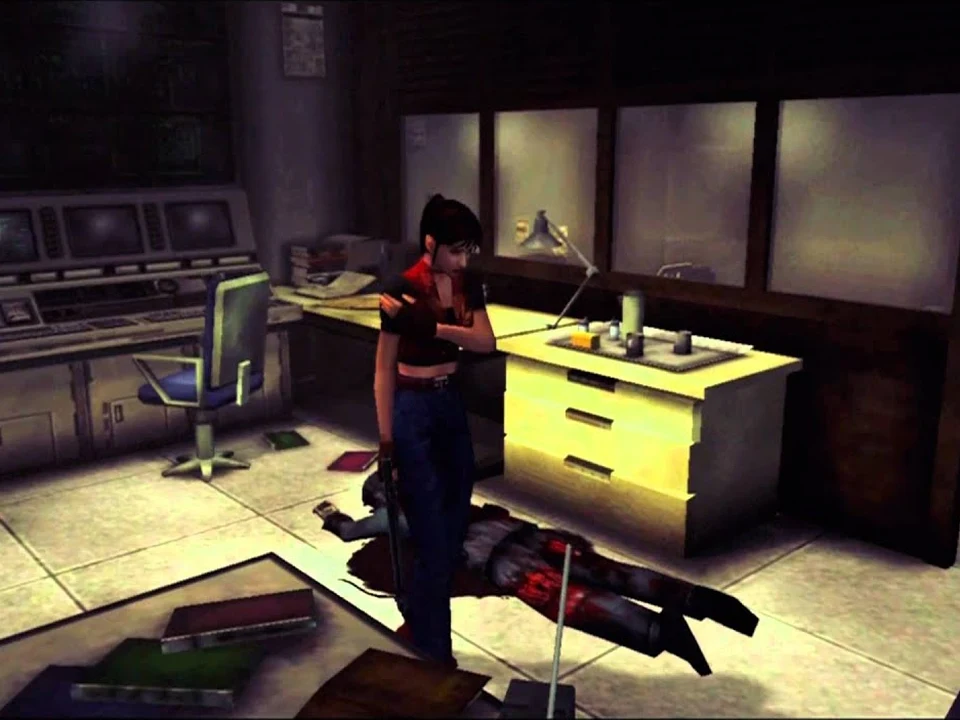
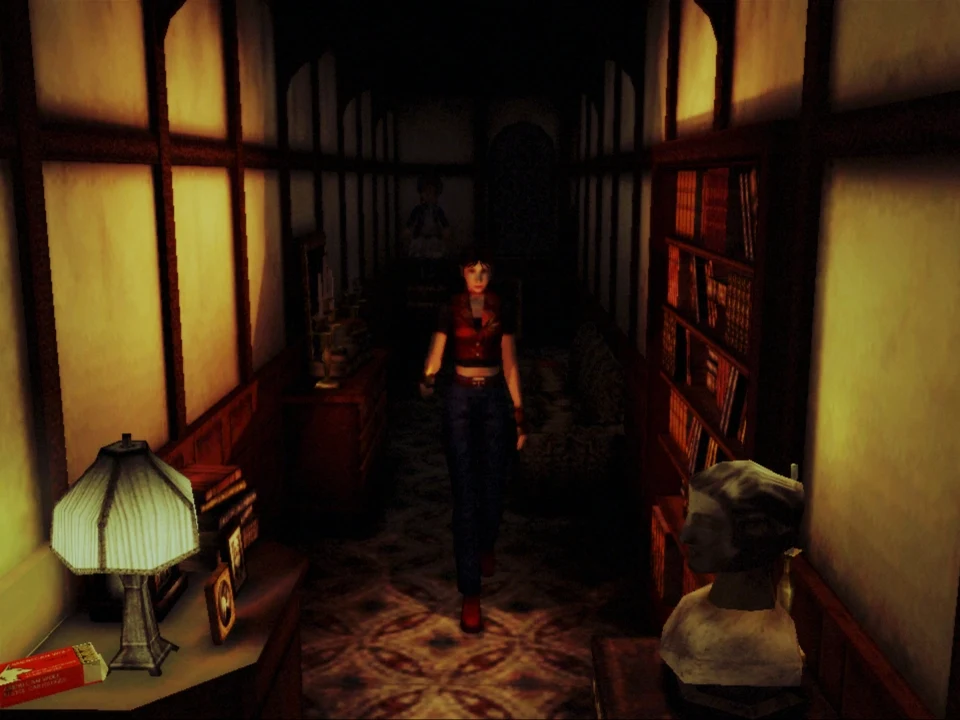
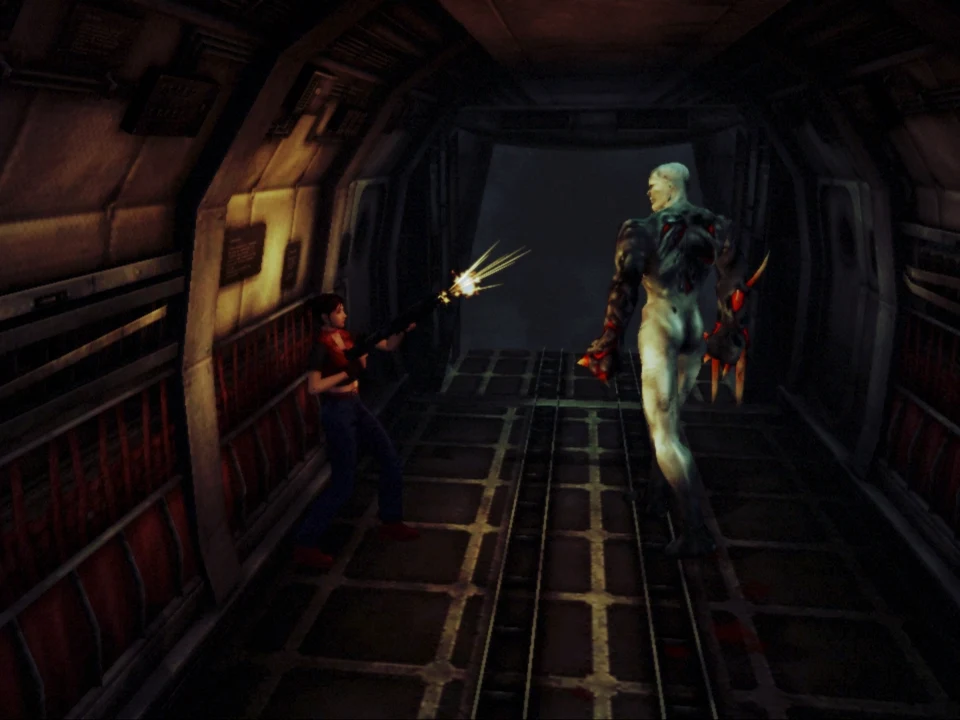
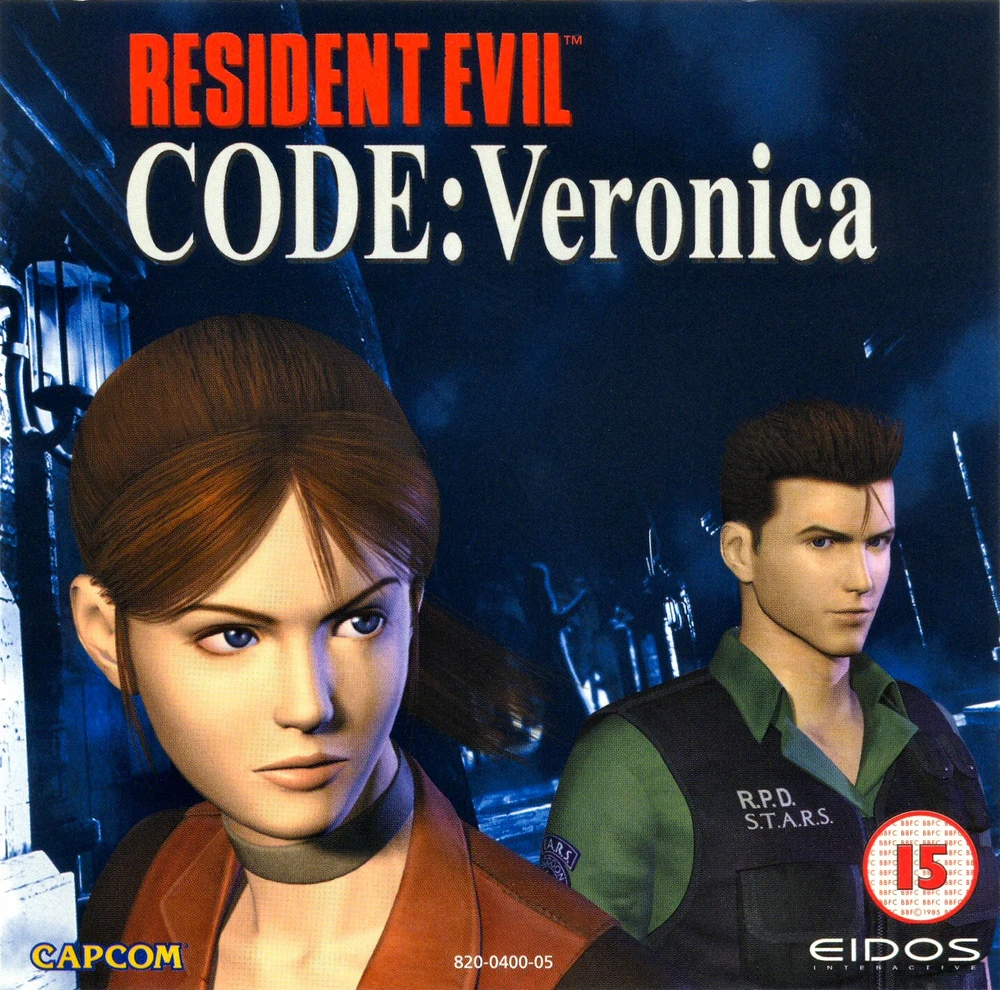
Code: Veronica is the true sequel to Resident Evil 2. It is released exclusively on the Dreamcast, the Sega console, and it is the first episode to leave the pre-calculated settings: everything is in real-time 3D, the camera moves and follows the movements, and the cinematic scenes are more elaborate in their staging.
It wasn't released on PS1, but it belongs entirely to that era and is the natural conclusion of the story begun at Spencer Manor. It is also the longest and most difficult episode of the classic saga.
The story
December 1998, three months after the destruction of Raccoon City. Claire Redfield continues her search for her brother and is captured during an infiltration into an Umbrella facility in Paris. She is sent to Rockfort Island, a private prison owned by the lost company amidst the ocean. When an attack unleashes a virus on the island, Claire escapes and teams up with Steve Burnside, a young inmate.
The island is run by Alfred Ashford, the eccentric heir to one of the founding families of Umbrella, obsessed with his twin sister Alexia. The escape leads Claire and Steve to a base in Antarctica, and the second half of the game finally introduces Chris Redfield, who went in search of his sister.
The characters of Code: Veronica
Tap on a portrait to view its details.
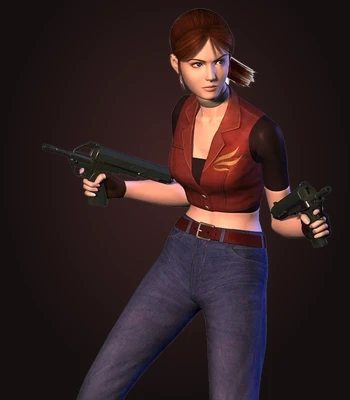
Claire Redfield
Captured in Paris while searching for her brother, Claire escapes from the prison on Rockfort Island.
- Location
- Rockfort Island
- Weapons
- Combination pistols
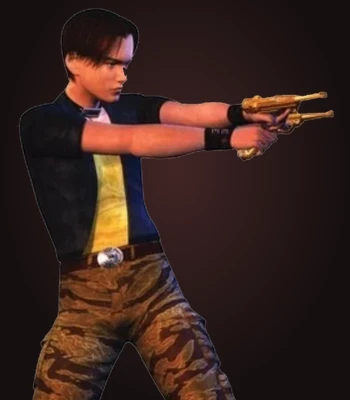
Steve Burnside
A young inmate on the island, impulsive and endearing, who teams up with Claire to escape.
- Statute
- Prisoner
- Age
- 17 years old
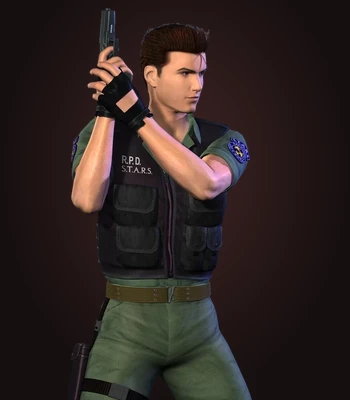
Chris Redfield
The hero of the first episode returns to find his sister. He appears in the second half of the game.
- Former unit
- S.T.A.R.S.
- Part
- Second half
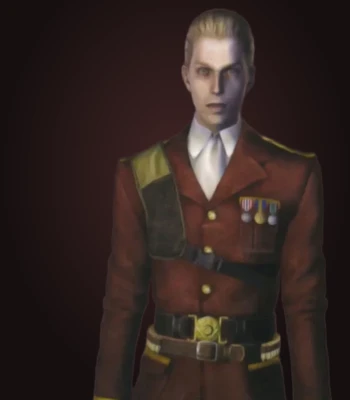
Alfred Ashford
The master of the island of Rockfort, heir to a family that founded Umbrella. Unstable, he worships his twin sister.
- Family
- Ashford
- Role
- Commander of the island
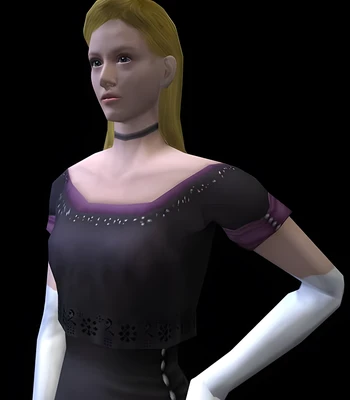
Alexia Ashford
Alfred's twin sister, a genius scientist with a mysterious destiny.
- Family
- Ashford
- Talent
- Scientific genius
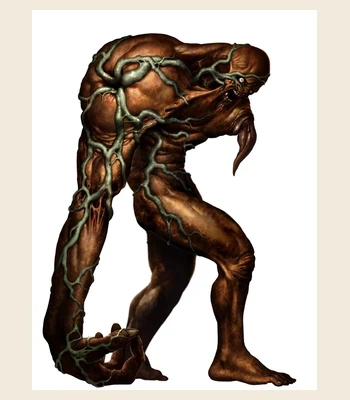
BanderSnatch
An oversized creature that attacks from a distance, one of the new enemies of Code: Veronica.
- Location
- Rockfort Island
- Danger
- Lie down
The gameplay
The gameplay remains faithful to the PS1 episodes, with its «tank» controls, ink ribbons, and loot crates. The new features are in the details: paired weapons that Claire can point at two targets, herbs that combine more freely, and progression in two major parts, where choices made with Claire weigh on Chris's part.
The game is long and demanding. You have to manage your ammunition throughout the entire adventure and anticipate certain situations: you could end up very depleted during a major confrontation if you have spent everything before. Once the game is over, a Battle mode offers the opportunity to engage in combat with multiple characters.
The landmark places
| Location | What you'll find there |
|---|---|
| The prison on Rockfort Island | The cells, the cemetery and the base facilities, in ruins after the attack. |
| The Residence of Ashford | A luxurious and unsettling residence, with its paintings, toys, and music box. |
| The palace and the airfield | The buildings on the island are connected by courtyards, underground passages and bridges. |
| The base of Antarctica | A complex buried under the ice, where the end of the adventure plays out. |
The riddles
The puzzles return to the great tradition of the manor: emblems and keys in strange shapes, a music box to be played, paintings, door mechanisms and objects to combine, with many twists and turns between the island and Antarctica.
The enemies and bosses
| Creature | Where and how |
|---|---|
| Zombies | Guards and prisoners of the island, and personnel of the base in Antarctica. |
| BanderSnatchs | Creatures with extensible arms capable of striking at a distance. |
| Hunters and bats | Regulars of the series, in a more aggressive version. |
| Giant phalanxes | They lay eggs that poison the player. |
| The giant worm | A subterranean monster capable of swallowing its prey in one go. |
| The Tyrant | A version of Umbrella's biological weapon aboard the transport plane, which appears several times. |
Show the rest (reveals the end of the game)
Alexia Ashford, who was believed to have been missing since childhood, turns out to be alive: she had fallen into a deep sleep to merge with the T-Veronica virus she had created. Steve is infected by this virus and transforms before Claire's eyes. Albert Wesker, who was believed to be dead since the manor, reappears to take possession of Alexia and her virus, and confronts Chris before he eliminates Alexia and escapes with his sister.
The welcome upon his departure
Code: Veronica was well received by critics (an average score of 94/100 on Metacritic) and considered by many to be the best Resident Evil at its release. It sold 1.14 million copies on the Dreamcast, then was released in 2001 on the PS2 under the name Code: Veronica X, with some new scenes around Wesker.
Why play it again today?
For the history. It's the episode that links the Spencer manor, Raccoon City and the future of the series, with the return of Chris and the Ashford family. And for the Dreamcast itself: Code: Veronica remains one of the best games on the console.
And Resident Evil Survivor?
Released on PS1 in March 2000 in Europe, Resident Evil Survivor is a spin-off episode developed by Tose, in a subjective perspective. In it, you play Ark Thompson, a amnesiac detective who awakens after a helicopter accident on the island of Sheena, a city devoid of Umbrella. In Europe, the game is played with the G-Con 45 optical pistol or the controller.
The criticism is harsh (39/100 average on Metacritic): graphics lacking, short lifespan and unclear target audience. It is more of a curiosity for collectors rather than a standalone episode, and it is not part of the GearMaster catalog.
In what order should I play the Resident Evil games from the PS1 era?
The order of the exit and the order of the story are not exactly the same, because Resident Evil 3 begins before Resident Evil 2 and ends after it.
| Order of History | Game | When does the action take place |
|---|---|---|
| 1 | Resident Evil | July 24 and 25, 1998, Spencer Manor |
| 2 | Resident Evil 3: Nemesis (first part) | September 28, 1998, Raccoon City |
| 3 | Resident Evil 2 | September 29 and 30, 1998, Raccoon City |
| 4 | Resident Evil 3: Nemesis (second part) | Until October 1st, 1998 |
| 5 | Resident Evil Survivor | Shortly after the fall of Raccoon City, Sheena Island |
| 6 | Resident Evil Code: Veronica | December 1998, Rockfort Island and Antarctica |
Our advice: play the series in order, starting with Resident Evil, then Resident Evil 2, Resident Evil 3, and Code: Veronica. Each episode is designed to be discovered after the previous one, and Resident Evil 3 is stronger when you already know the story of Resident Evil 2. Resident Evil 0, released later and absent from the PS1, tells what happened before the first episode.
Which is the best Resident Evil on PS1?
There is no bad choice among the three main episodes. It all depends on what you are looking for.
| Game | PS1 sales | Strengths | For whom? |
|---|---|---|---|
| Resident Evil Director's Cut | 2.75 million (original version) | The manor, the exploration, the pure tension | Enigma and atmosphere lovers |
| Resident Evil 2 | 4.96 million | Two heroes, four scenarios, the police station | Those who discover the saga |
| Resident Evil 3: Nemesis | 3.5 million | The Nemesis, action, real-time choices | Players who like to be under pressure |
| Code: Veronica (Dreamcast) | 1.14 million | History, 3D, and lifespan | Those who want the sequel and a real challenge |
If we were only allowed to keep one of them, it would be Resident Evil 2. It is the best-selling, most spectacular and most generous with its four scenarios, without losing any of the anxiety of the first one. But the first Resident Evil remains the purest, and Code: Veronica the most ambitious.
Resident Evil PS1 or remakes: what differences?
Capcom has remade almost all the episodes of the PS1 era. The remakes do not replace the originals: they tell the same story in a different way.
| Original game | Remake | What changes |
|---|---|---|
| Resident Evil (1996) | Resident Evil (2002), released in HD in 2015 | Completely redesigned environments, new zones, new puzzles and zombies that return stronger if their bodies are not burned. The fixed camera and structure are retained. |
| Resident Evil 2 (1998) | Resident Evil 2 (2019) | A camera on the shoulder, continuous scenery, and a Mr. X who stalks the player from the very first scenario. The pacing is simplified. |
| Resident Evil 3 (1999) | Resident Evil 3 (2020) | A camera on the shoulder and a more cinematic staging, but a shorter adventure, without real-time choices, without the park or the cemetery of the original. |
| Code: Veronica (2000) | Announced | Capcom has announced a remake of Code: Veronica. The original version remains the only way to experience the adventure of Rockfort Island. |
The remakes are more beautiful and more comfortable to handle. The originals retain what made them strong: the fixed cameras that hide the danger, the pre-calculated environments, the original music, and the structure of the puzzles. For Resident Evil 3, the original is even longer and richer than its remake.
How to play Resident Evil PS1 today?
1. On an old PlayStation
The PS1 discs work on PS1, PS2 and PS3. The games are available second-hand, often between €30 and €85 depending on the episode and the condition, and a memory card is required to save them. Code: Veronica asks for a Dreamcast or its PS2 version, Code: Veronica X.
2. On PS4 and PS5
The PS5 does not read the discs of the first PlayStation. These are mainly the remakes that are found on current consoles, as well as Code: Veronica X, released in HD.
3. About the GearMaster
Resident Evil Director's Cut, Resident Evil 2 and Resident Evil 3 are among the 20,000 games on the GearMaster, with Code: Veronica in its Dreamcast version. You plug the console into HDMI on the TV and play with a wireless controller, without a disc or memory card.
Want more classics? Our ranking of the best 30 best PS1 games, our dossier on all Crash Bandicoot games and our guide MediEvil on PS1 They are good starting points.
The Spencer Manor awaits you
Plug the GearMaster into HDMI, grab a wireless controller and launch Resident Evil, Resident Evil 2 or Nemesis in seconds. No subscription, no disc, no memory card required.
Frequently asked questions about Resident Evil PS1
1When was Resident Evil released on the PS1?
The first Resident Evil was released on March 22, 1996 in Japan (under the name Biohazard), on March 30, 1996 in the United States, and on August 1, 1996 in Europe. The Director's Cut followed in December 1997 in Europe, Resident Evil 2 on May 8, 1998, and Resident Evil 3: Nemesis in early 2000.
2How many Resident Evil games are there on PS1?
Three main episodes: Resident Evil (and its Director's Cut), Resident Evil 2 and Resident Evil 3: Nemesis. There is also Resident Evil Survivor, a derivative episode with a subjective point of view. Code: Veronica, the sequel to Resident Evil 2, was released on the Dreamcast and then on the PS2.
3What is the best version of Resident Evil 1?
On PS1, it's the Director's Cut: it contains the original game, a Beginner mode and an Arranged mode with new camera angles and moved objects. For a modernized version, the 2002 remake, released in HD in 2015, completely recreates the manor while keeping the spirit of the game.
4In what order should I play Resident Evil?
In order of release: Resident Evil, Resident Evil 2, Resident Evil 3: Nemesis and then Code: Veronica. In the order of the story, Resident Evil 3 begins before Resident Evil 2 and ends after it, and Code: Veronica takes place three months later.
5Which is the best Resident Evil on PS1?
Resident Evil 2 is most often cited: it is the best-selling (4.96 million copies) and richest, with two heroes and four scenarios. The first episode remains the purest in terms of atmosphere, and Resident Evil 3 the most intense thanks to Nemesis.
6Was Code Veronica released on PS1?
No. Code: Veronica was released in 2000 on the Dreamcast, then in 2001 on the PS2 under the name Code: Veronica X, with a few additional scenes. There is no PS1 version.
7What is the mythical game of the PS1?
Several games always return: Final Fantasy VII, Metal Gear Solid, Gran Turismo, Crash Bandicoot, Tekken 3 and, of course, Resident Evil 2. Our ranking of 30 best PS1 games details these legends one by one.
8What is the rarest game from the PS1?
The rarest games are often those released in small quantities or in only one region. The Resident Evil series, on the other hand, is not rare: they have sold millions of copies. Their used price depends mainly on the condition of the case and the presence of the manual.
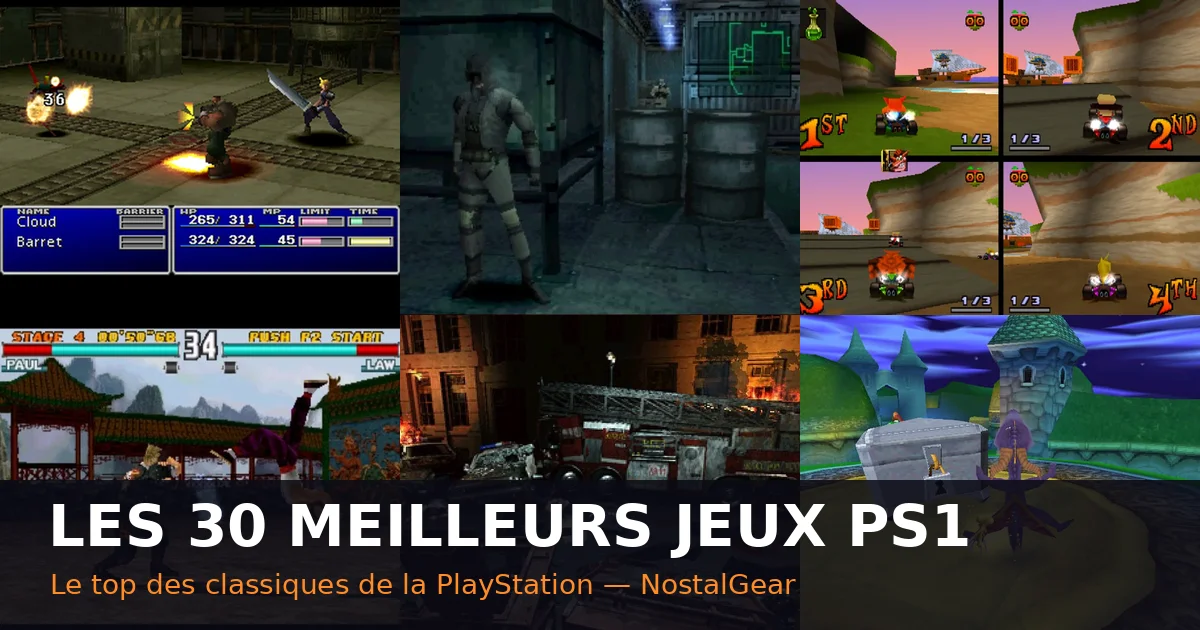
The 30 best PS1 games: the top classics of the PlayStation
Final Fantasy VII, Metal Gear Solid, Crash Team Racing… Our ranking of PlayStation legends.
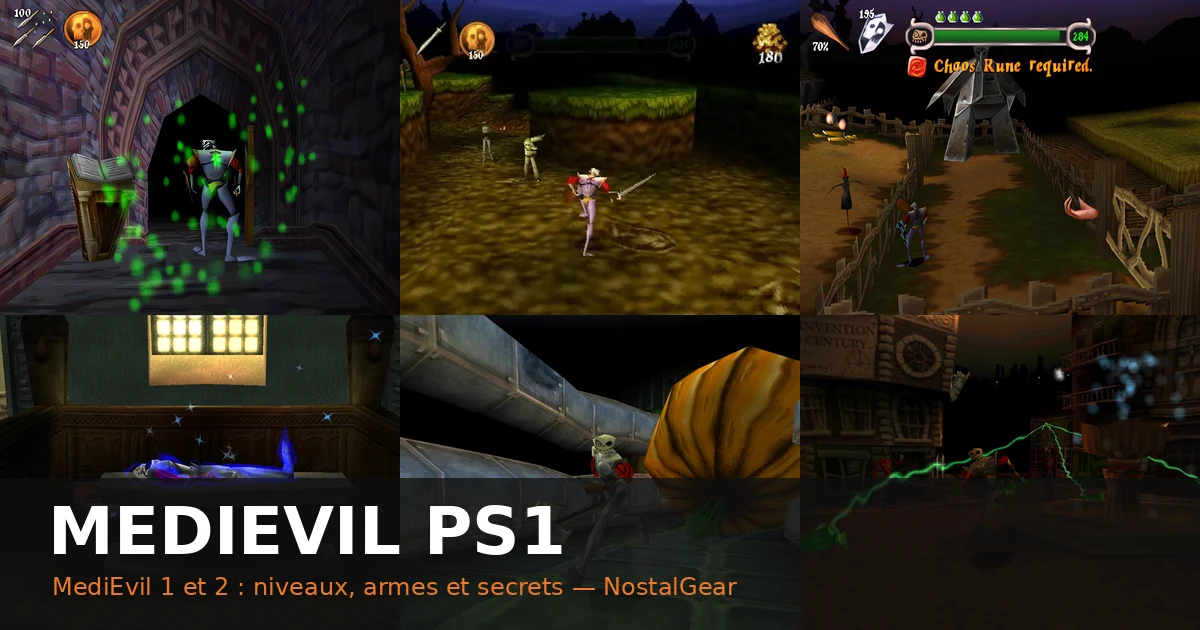
MediEvil PS1: MediEvil 1 and 2, all levels, weapons and secrets
Sir Daniel Fortesque, its 22 levels, its weapons and bosses: the other horror (and funny) saga on PlayStation.
Explore NostalGear
GearMaster
20,000 games, 70 systems. Plug & Play in 30 seconds.
Shop the bundles
GearPad Pro
The wireless controller built for retro gaming.
Discover
Game list
Find your childhood favorites among 20,000 games.
Explore
Reviews
Blogger reviews and customer feedback.
Read the reviews
GearOne Magazine
Retro game rankings, picks, and stories.
Read the blog
30-day
returns

Friendly customer
support

Secure
checkout

Limited lifetime console warranty*